Health & Performance
Why are you tired by 2pm?
It's not your diet. It's not your sleep. Most desk workers have no idea their posture is slowly reducing their oxygen intake — and what it's doing to their brain.
By the Seatly team · 4 min read

You woke up fine this morning. You weren't especially stressed. You had coffee. Maybe a decent lunch. And yet, somewhere around 1 or 2pm, your brain just stopped cooperating.
Focus goes first. Then the energy. Then the motivation to do anything that requires actual thinking. You find yourself re-reading the same paragraph. Staring at a task you've been putting off. Reaching for another coffee that doesn't really fix it.

You've probably blamed a dozen things. Poor sleep. Too many carbs at lunch. Screen time. The weather. But there's something happening that almost nobody talks about — something that's been affecting you every single working day, that gets worse the longer you sit.
Your body is running on less oxygen than it was designed to use. And the reason is sitting right there in your chair.

Here's what's actually happening
Slouching compresses your lungs. Your brain pays the price.
When you sit with a rounded lower back and forward head — which most desk workers do for 6 to 10 hours a day — your rib cage folds inward. It has nowhere to go. And as it folds, it presses against your lungs.
Research shows that sustained slouching can reduce your functional lung capacity by up to 30%. That means every breath you take while slumped at your desk delivers significantly less oxygen than your body needs to perform.
Your brain is the most oxygen-hungry organ in your body. It makes up roughly 2% of your body weight but consumes around 20% of your total oxygen intake. When that intake drops — even slightly — the first thing you notice is cognitive performance: slower thinking, difficulty concentrating, that heavy foggy feeling that no amount of coffee seems to fix.
For millions of desk workers, the afternoon energy crash isn't a lifestyle problem. It's a structural one.
The fix isn't what you think
It's not a supplement. Not a standing desk. Not a stretching routine.

All of those things have their place. But none of them address the root cause of the compression — which is the structure of your lower back while you sit.
Here's what most people get wrong: they try to fix their posture at the shoulders. Pull the shoulder blades back, sit up straight for twenty minutes, then slowly collapse again. That's because the posture problem doesn't start at the shoulders. It starts at the lower back.
When your lower back loses its natural curve — which happens almost immediately in a standard chair — your entire spine compensates. Your upper back rounds. Your shoulders fall forward. Your head drifts out in front of your body. And your rib cage collapses inward.
Fix the lower back, and the whole chain realigns. The shoulders open. The chest lifts. The rib cage expands. And your lungs get the room they've been missing all day.
Meet Lumbr
The posture corrector built around the lower back — because that's where the problem starts.
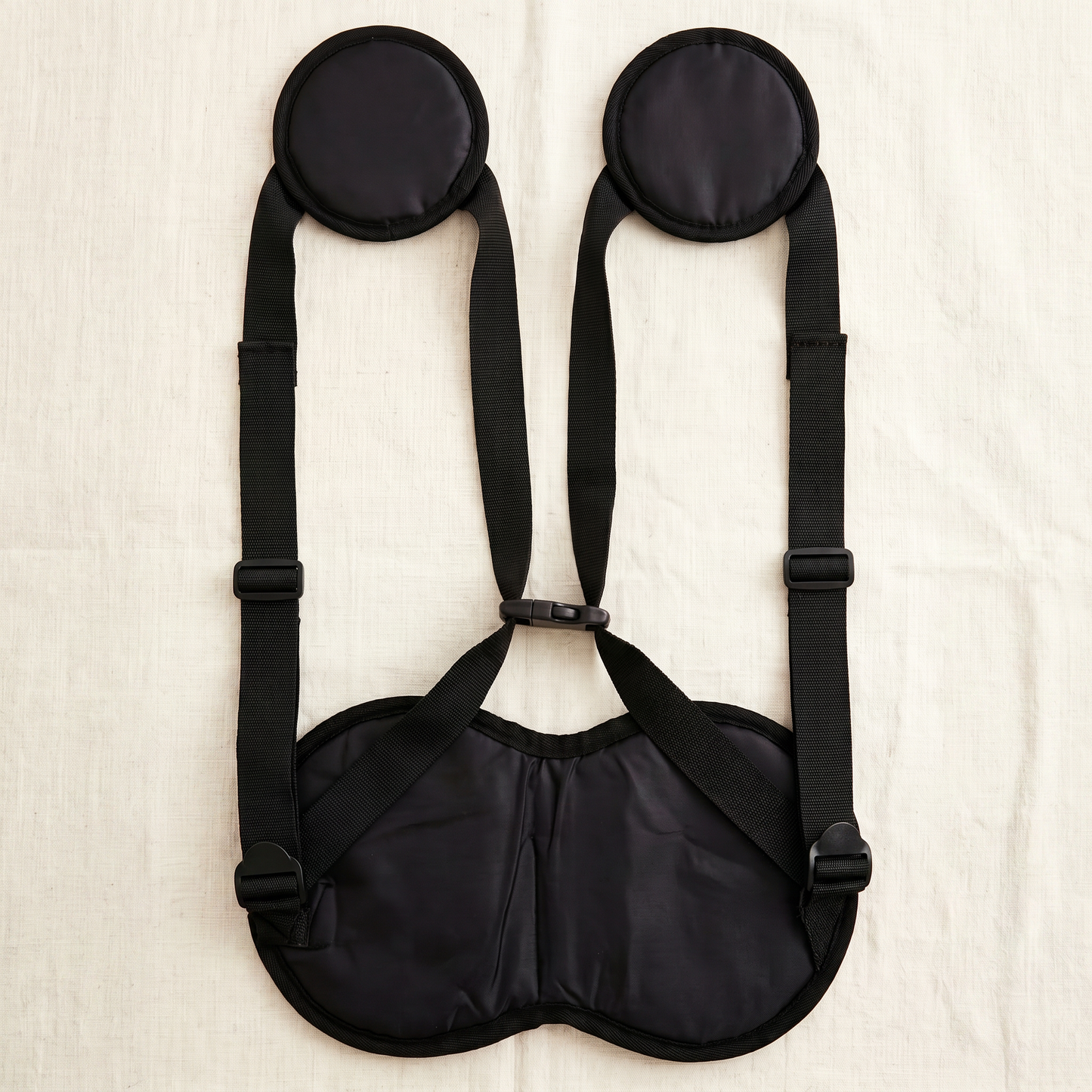
Lumbr's pad sits directly on your lower back — the root of the postural collapse — while straps position your knees to realign your entire spine from the base up.
When your lower back is properly supported, your rib cage opens. Your lungs expand. And the oxygen your brain has been missing all afternoon starts flowing again.
- Pad on lower back— direct support at the root of the compression
- Straps over knees— realigns the full spinal chain from the base up
- Even 15 minutes a day— begins retraining your posture immediately
Most users notice a measurable difference in alertness within the first week.

14-day money-back guarantee · Free US shipping
See the difference
Same person. More oxygen. Different afternoon.


"I bought it sceptical. By the end of week one I was getting through my afternoons without the crash. My focus after lunch is completely different."
— Markus, 34, software engineer
What our customers report
Real results. Real numbers.
87%
reported more energy and alertness during the workday
81%
reported reduced afternoon brain fog
94%
noticed posture improvement within 2 weeks
Based on a survey of 400+ verified Lumbr customers, 2025.
What people are saying
From people who used to hit a wall at 2pm.
Ready to reclaim your afternoon?
Your 3pm crash is a posture problem.
This is the fix.
Start with one. Feel the difference this week.
- Targets the lower back — the root of the compression
- Even 15 minutes a day makes a phenomenal difference
- 14-day money-back guarantee
- Free US shipping


Lumbr
Lumbr
- Works in 20 min/day — no all-day commitment
- 14-day money-back guarantee
- The longer you wait, the harder posture is to fix.
Get it between - and -.


Got questions?
Everything you need to know.
Collapsible content
Collapsible row
Collapsible row
Can posture really affect my energy levels?
Can posture really affect my energy levels?
Yes — the mechanism is direct. Slouching
compresses your rib cage and reduces lung capacity by up to 30%. Less oxygen
reaches your brain. Your brain consumes around 20% of your total oxygen intake,
so even a modest reduction in intake produces noticeable cognitive fatigue.
This is documented anatomy, not a wellness claim.
How quickly will I notice more energy?
How quickly will I notice more energy?
Most users report a noticeable difference in
breathing and alertness within the first week of daily use. Full posture
retraining — where your body holds the correct position without Lumbr —
typically takes 2 weeks.
Do I need to have back pain for this to work?
Do I need to have back pain for this to work?
No. Most energy-focused users have no back pain
at all. If your posture is collapsed from hours of sitting, Lumbr corrects the
structural compression regardless of whether it hurts.
How long do I need to wear it each day?
How long do I need to wear it each day?
Even 15 minutes
a day makes a phenomenal difference. We recommend wearing it during your most
compressed work hours — usually morning — so your body is in the right
position during the hours that matter most for focus.
What if I don't notice a difference?
What if I don't notice a difference?
14-day money-back guarantee. If you don't notice
an improvement in how you feel during the workday, we'll refund you in full —
no questions asked.
How is this different from other posturecorrectors?
How is this different from other posturecorrectors?
Most posture
braces strap across your upper back and shoulders and treat the symptom.
Lumbr's pad sits on your lower back — the root of the postural collapse — and
uses knee straps to realign your entire spine from the base up. That's the
only way to actually restore your lung capacity.